Dear Countdown Companions:
This being the Monday after the first Sunday of Advent means that time, like that ever-flowing stream, will bear us all to the inevitable December 25 when we will proclaim Christ’s birth (and wonder why we put out so many decorations when it was warmer, since now it's way too cold to put them away).
In anticipation, our world organizes itself to tick off the moments until that particular day—Christmas.
It's very tough for us as North Americans to imagine Mary and Joseph trudging to Bethlehem in anything but, as Christina Rossetti memorably described, "the bleak midwinter," surrounded by "snow on snow on snow." To us, Christmas and December are inseparable. But for the first three centuries of Christianity, Christmas wasn't in December—or on the calendar at all.
When observed, the celebration of Christ's birth was usually lumped in with Epiphany (January 6), one of the church's earliest established feasts. Some church leaders even opposed the idea of a birth celebration. Origen (c.185-c.254) preached that it would be wrong to honor Christ in the same way Pharaoh and Herod were honored; birthdays were for pagan gods.
Not all of Origen's contemporaries agreed; some speculated on the date, as actual records were long lost. Clement of Alexandria (c.150-c.215) favored May 20, but others argued for April 18, April 19 or May 28. Hippolytus (c.170-c.236) championed January 2. November 17, November 20 and March 25 all had backers as well. A Latin treatise written around 243 pegged March 21, because that was believed to be the date on which God created the sun. Polycarp (c.69-c.155) had followed the same line of reasoning to conclude that Christ's birth and baptism most likely occurred on Wednesday, because the sun was created on the fourth day (Genesis 1.14-19).
The eventual choice of December 25, perhaps as early as 273, reflects a convergence of Origen's concern about pagan gods and the church's identification of God's son with the celestial sun. December 25 already hosted two pagan festivals: Natalis Solis Invicti (the Roman "birth of the unconquered sun") and the birthday of Mithras, the Iranian "sun of righteousness" whose worship was popular with Roman soldiers. The winter solstice, another celebration of the sun, fell just a few days earlier. Seeing that pagans were already exalting deities with some parallels to the true Deity, church leaders decided to commandeer the date and introduce a new festival.
Western Christians first celebrated Christmas on December 25 in 336, after Emperor Constantine had declared Christianity the empire's favored religion. Eastern churches, however, held on to January 6 as the date for Christ's birth and his baptism. Most Easterners eventually adopted December 25, celebrating Christ's birth on the earlier date and his baptism on the latter, but the Armenian church celebrates his birth on January 6. Incidentally, the Western church does celebrate Epiphany on January 6, but as the arrival date of the Magi rather than as the date of Christ's baptism at the age of 30.
Another wrinkle was added in the sixteenth century when Pope Gregory devised a new calendar that was unevenly adopted. The Eastern Orthodox and some Protestants retained the Julian calendar, which meant they celebrated Christmas 13 days later than their Gregorian counterparts. Most—but not all—of the Christian world now agrees on the Gregorian calendar and the December 25 date.
The pagan origins of the Christmas date, as well as pagan origins for many Christmas customs (gift-giving and merrymaking from Roman Saturnalia; greenery, lights and charity from the Roman New Year; Yule logs and various foods from Teutonic feasts) have always fueled arguments against the holiday. "It’s just paganism wrapped with a Christian bow," complains one anti-Christmas website.
Indeed, for centuries in Scotland, December 25 was just another workday. In 1580 John Knox banned the celebration of Christmas following the Apostle Paul’s admonition to hold no days special or holy. Besides, any celebration with the word Mass in it was clearly too Catholic and could not be trusted. Christmas was not officially or legally celebrated in Scotland for nearly 400 years. It wasn’t until the 1950’s that Christmas was an official holiday.
But, as a fourth century theologian asserted, "We hold this day holy, not like the pagans because of the birth of the sun, but because of him who made it."
And so, it clearly, confidently, unavoidably, most defiantly arrives just on the date we anticipate—December 25—with or without the vote of Session. Like a birthday, it is and will come.
Unfortunately, the season has ceased to be about the certainty of anticipation and instead has been twisted into the unpredictability of hope. While we know that the date of Christmas will come, we are cautiously unsure if we will get what we want, and therein lies the danger of this season, and perhaps our darkest compromise with a pagan world.
Pagan gods need to be seduced. They need to be convinced. If you want the sun to come back from winter, you’ve got to convince him it’s worth the journey. If you want your harvest to be plentiful, sacrifices will improve your odds. If you want your wife to love you, there are incantations, bling to buy, lotions and potions that might make it happen. If your children are sick, here's a list of prayers, and maybe your hopes will be fulfilled—that is, if the gods are convinced!
Of course, we don’t think that way, do we? What about just the right gift for Christmas? Or the decorations that will give off a perfect holiday feel, or invitations that will finally convince that son-in-law to not be a jerk to your daughter? There‘s a short line between pagan worship and how we are tempted to behave!
It is this simple principle from the Gospel of Christ: a pagan hopes; a Christian believes.
And so, at the beginning of this season, the beginning of the liturgical year, we start with things certain—not wistful or dreamy, but things we proclaimed true. Without a doubt, Christ was born, and with equal confidence we anticipate his return. While we cannot mark with certainty the specific day of ether event, it is fact as sure as a birth: God arrives.
Wandering through the reason for the season, I remain,
With Love,
Jonathan Krogh
Your Pastor
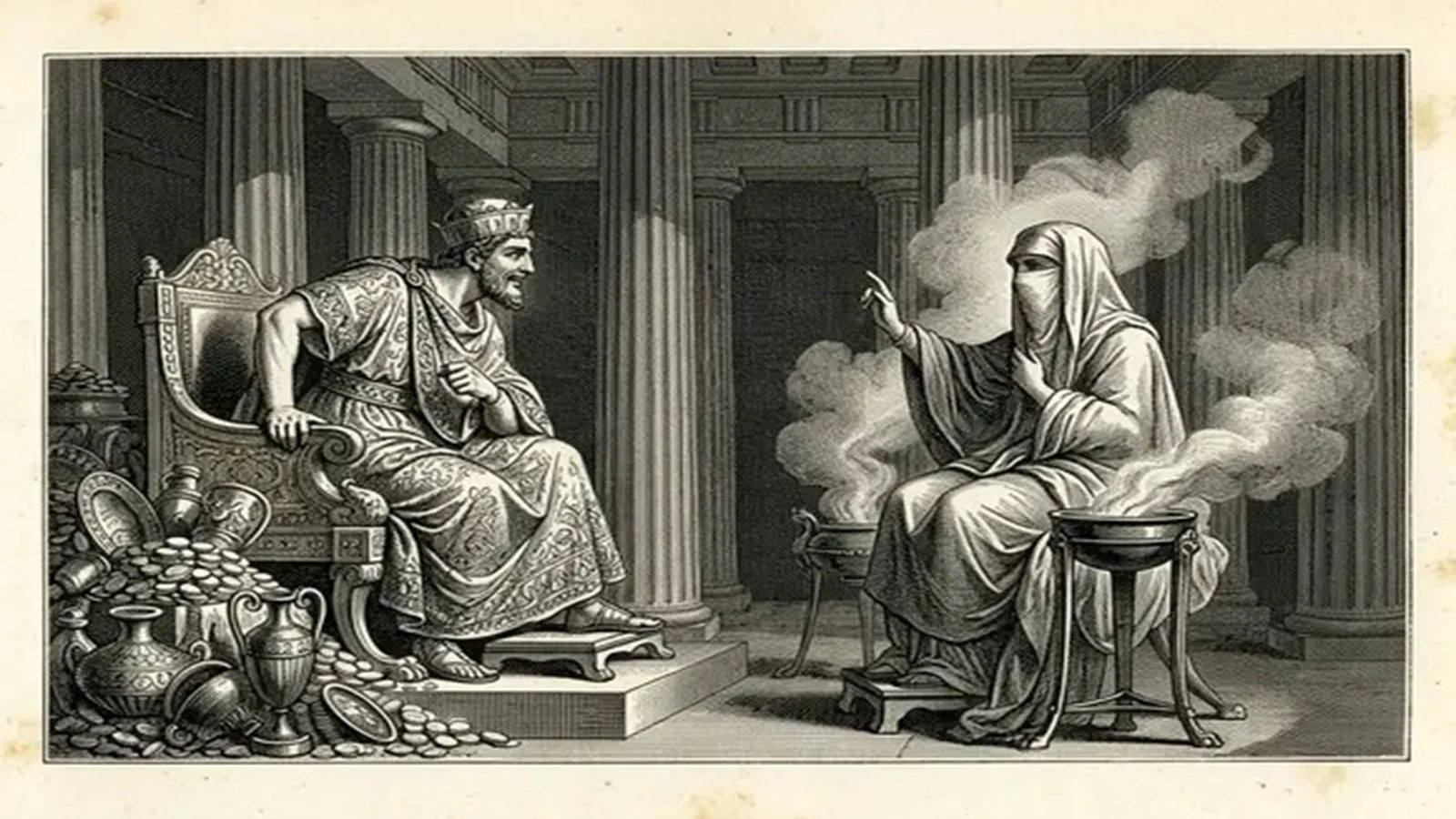
Dear Inquiring Minds:
When I was little, my mother would refer to someone with great wealth as “rich as Croesus.” As a child, I heard “rich as creases.” I understood she meant that the person had tons of money, but I struggled to picture the expression. Did gold coins drop from every wrinkle in their clothing? Knowing the proper spelling would not have helped; ancient Mesopotamian history was not a staple of my early
Dear Decoration Monsters:
I was stunned by a neighbor’s 26-foot inflatable vampire, priced at slightly under $1,000 and dominating the… well, dominating everything! I think it may have been an attempt to dwarf the dozens of 12-foot skeletons that Home Depot debuted during the pandemic and that now seem to litter every block. (“Skelly” even has his own Wikipedia page.) Skelly’s designers wanted to make him tall enough to peer into second-story
Dear Generous People:
It’s that time of year again when a pledge form will arrive in your mailbox, inviting you to consider what you are able to contribute toward our church’s operating expenses for the coming year. Ten times each year, the Session reviews the gifts and expenditures of our congregation, and this year we have witnessed something remarkable:
Dear Confessors:
I want to start today’s musing with a shout-out to Susan Rusk, who provides, along with dozens of other quiet services to FPCLG, regular cleaning of the hymnal racks in the Sanctuary. I have always been an admirer of an orderly hymnal rack; when you are seated for worship and things are neat and tidy, you feel prepared for. Like going to a messy friend’s home for dinner and realizing they vacuumed just for you! It makes the invitation feel authentic. I have visited churches where a reach for the pew Bible yielded a
Dear Sober Companions:
Anyone who has a friend struggling with substance use disorder knows how carefully they work to avoid triggers. For some, bars, parties and receptions bring powerful temptations to relapse. Knowing their limits, they may simply decline an invitation rather than risk their recovery. It is better to miss an occasion than regret what follows.
For the political junkies among us, myself included, election cycles offer enormous opportunities to binge on our drug of choice. Everyone else seems to be guzzling
Dear Picky People:
We may assume that more choices create more opportunities for satisfaction, but more options do not necessarily increase happiness. In “Fast-Forward to Boredom: How Switching Behavior on Digital Media Makes People More Bored” (Katy Y. Y. Tam, PhD, and Michael Inzlicht, PhD, University of Toronto, Journal of Experimental Psychology: General, published online August 19, 2024), Tam and Inzlicht hypothesized that if participants were allowed to scroll through multiple videos, they would feel less bored than those
Dear Fellow Mourners:
Recently, I have been musing on the work of Peter Homans (d. 2009), Professor of Religion and Psychology at the University of Chicago Divinity School. In his seminal book, The Ability to Mourn: Disillusionment and the Social Origins of Psychoanalysis (University of Chicago Press, 1989), Homans argued that psychoanalysis emerged in response to the loss of shared religious symbols brought about by industrialization. Freud, Jung and others turned their grief
Dear Luddite Siblings:
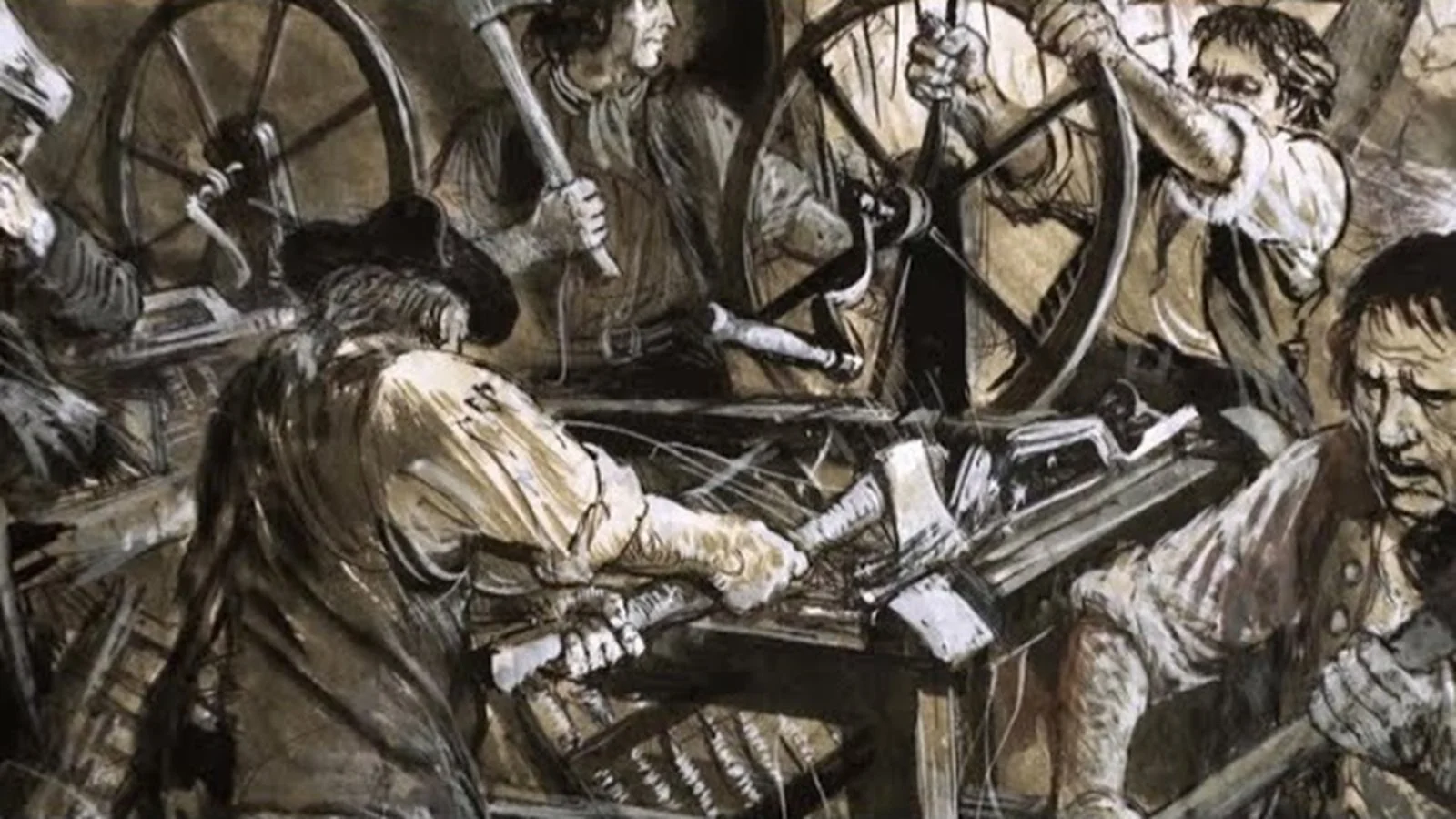
For the past few weeks, I’ve been musing about Ned Ludd, the hot-tempered weaver from Anstey, England. According to legend, Ludd was a Nottingham textile worker who, in 1779, became so enraged by the introduction of the automated knitting machine that he smashed several of them to defend his craft. The story was not recorded until 1811 in a Nottingham paper; this long delay and the identification of Ned’s home as Sherwood Forest (Robin Hood reference?) resulted in dismissing
Dear Children of the fall:
With Labor Day behind us, we are unofficially in autumn. “Unofficially,” because astronomical fall begins when Earth’s tilt aligns the sun directly over the equator on its southward journey toward the winter solstice. This year, that happens on September 22 at 7:05 p.m. CDT. The first days of autumn and spring are called equinoxes—literally, “equal night”—which sounds like a neat division of 12 hours of daylight and 12 hours of darkness. Nature, however, has not consulted the sunrise/sunset tables. On the first day of autumn, daylight lasts about nine minutes too long because Earth’s atmosphere refracts the sun’s rays. The tidier balance arrives on September 26. Meanwhile, meteorological fall began September 1, because weather forecasters prefer their seasons in convenient three-month boxes.
These competing autumns have led me to wonder what it means to call anything true with precision. I realize, no one asked, but
Dear Legend Lovers:
With the passing of Dolly Parton last Tuesday, newsfeeds exploded with nostalgia acknowledging her magnificent blend of simple country style, relentlessly graceful inclusion and deeply shrewd business sense. Her ability to steer her brand through the maze of conservative and liberal adoration was astounding, reflected in the current hyper-antagonisms over who holds the right to claim her legacy.
One can scarcely imagine any individual receiving both the current administration’s half-mast flag order and a glowing online eulogy by Jane Fonda. Praised by online
Dear Champions for Children:
I just saw the obligatory back-to-school interviews on the morning news with students both smiling and shy queuing up to return to classrooms for another academic year. As always, the story ended with remarks about new backpacks and new beginnings. Then the bell rang and the kids filed in, never to be heard from again this year unless their facility becomes the site of some tragic mishap or violent crime. The cycle is a reminder of the medieval English proverb, “A mayde schuld be seen, but
Dear Mission Minded:
Last Monday, I reflected on the unintended colonialism of the missionaries who influenced my youth. I drew a wandering line from their condescending cultural attitudes to today’s supporters of immigrant deportation. But the more I thought about it, the more I realized the comparison was wrong. The missionaries who came
Dear Mission-Minded Members:
When I was a kid in church listening to missionary speakers describe peoples on other continents lost in darkened corners of the world, I was enrapt. It was as if the colorful photographs of our National Geographic had come alive. Ours was the task to release their very souls. Through our generosity we could bring light and life to their tragic, primitive ways. Theirs was an exotic but frightful world languishing in the absence of Western bureaucracy and decent footwear; and by our Christianly gifts we could bring them the wondrous jewels of literacy, first aid and, for Christ’s sake, covered breasts.
Now, decades later, the condescending paternalism
Dear Evangelicals:
One problem with language is how meanings drift. A word means one thing in its context and then over time takes on a new and sometimes opposite meaning. My favorite example is disgruntled. The prefix ‘dis-’ currently means to intensify the reverse; so, disrespect means the intense opposite of respect. But with the word disgruntled, the prefix demonstrates an old middle English form of the prefix ‘dis-’, meaning to completely or fully permeate. Disgruntled means to be completely permeated with complaint; the ‘dis-’ intensifies the ‘gruntledness’.
This drift of meaning seems to have happened with the word ‘evangelical’. Rooted
Dear Beautiful Friends:
Let’s start today with an observation about Genesis 1-3. It is not an account of the historic act of creation (i.e. it’s not a science lesson any more than the Big Bang Theory is a theology tutorial). Genesis offers insight into how the ancients understood their ideal connection to creation, God and one another. It also explains why they found these relationships so fractured. Careful reading of their texts may provide us with some useful
Dear Pensive Parishioners,
Simple elements sometimes capture majestic understanding. Julian of Norwich (1343-1416), the mystic who authored the oldest English texts attributed to a woman, is famous for her meditation on a hazelnut. She observed that this small and insignificant object existed because “God created it, God loves it, and God protects it” (Revelations of Divine Love, 1390-1410). Dame Julian perceived
Dear Merchants of Mortality:
According to my reconnaissance, Halloween decorations are already in HomeGoods, 111 days in advance. I understand why they might be pushing Halloween candy this early. I can get through four or five bags of mini-Snickers between now and October 31; that’s just good marketing. I also understand the brilliance of counting on shoppers to impulsively buy unique specialty items early, forget where they’ve stored them
Dear Surprised Patriots:
Fifty years ago, the Omaha zoo celebrated the birth of a baby buffalo named Teenial in honor of the nation’s 200th birthday. (Get it? Bison---) It was the kind of playful joke that suggested a national ease with patriotism.
Patriotic imagery seemed to be everywhere. Burger King printed coupons with biographies of Revolutionary heroes. Marcel toilet paper
Dear Worst of the Worst:
I have mentioned the great advice I received from older clergy mentors early in my career. Yesterday I remembered Claude Lewis, the late founder and pastor of Bethel Prayer Tabernacle in Roseland, who once remarked, “Ministry is what you end up doing when you’re trying to be the Preacher.” I won’t go into detail about why I recalled this sage observation from the departed brother Claude, but it’s happened again. I have a great pastoral plan, a program, an event, a presentation, a spellbinding sermon—and then people arrive. In the immortal words of Jerry Seinfeld, “People, they’re the worst!”
As usual, my sermon research took several turns as I prepared yesterday’s message. I only have 12–14 minutes
Dear Timid Text Translators,
In preparing my sermon yesterday I noted that Jesus quoted Hosea in the Gospel of Matthew, appealing to God's enduring desire for something deeper than religious performance. When chastising the Pharisees, perhaps Jesus’s favorite hobby, he said, “Go and learn what this means, ‘I desire mercy, not sacrifice.’ For I have not come to call the righteous but sinners.” (Mt 9:13)
What I did not include in my sermon turned out to be one of those rabbit holes of research too boring for the pulpit. Fortunately, I have these ‘Monday Musings’ to bore you on a weekday. My problem was textual. When Jesus said “mercy, not sacrifice,” the word in the Greek Text from Matthew is ἔλεος (el'-eh-os) which normally translated
Dear Document Drafters:
This past week I worked with a small committee of La Grange Area Ministerium members on a statement arising from concerns expressed during our monthly gatherings. The content of the declaration will be forthcoming, but this morning I am musing regarding the process.
Drafting anything with a committee is difficult. We all want to say something, but how that something is articulated is quickly bogged down with
Dear Pet Pleasers:
I was disappointed to discover that the cute videos of shelter dogs selecting their owners turned out to be AI generated. Now I can’t watch them. Before I knew they were ‘fakes’ I thought they were adorable. Although I had become suspicious when a husky tried to jump in the lap of an elderly woman in a wheelchair. Huskies are sort of the jerks of the dog park. But I still wanted to believe. And I did. Until I checked and found out they were indeed artificial fabrications. Now some of the accounts are being suspended because the creators were soliciting real cash to fund the care of digital dogs. Oddly, I feel sad for the pups.
This wander down AI-generated content got me thinking
Dear Remembering Ones:
Yesterday was a wonderful celebration of our 2026 Confirmation Class as Kaia and Claire offered their faith statements, presiding over the worship service with wisdom and grace. Classmate James, who had a prior commitment yesterday, will be received into membership at FPCLG at a later date; he will be confirmed in worship at Riverside Presbyterian Church next week along with Riverside Confirmation classmate, Gavin.
Sunday was also the occasion to celebrate my first full decade of ministry with FPCLG. This was a surprise and an event for which I am most grateful and will remember for years to come. I greatly appreciated the kind words, the magnificent commemorative etched-glass sculpture and, of course, the beautiful slide presentation recalling
Dear Organ Donors:
I’ve got an algorithm problem. That sounds like a condition that may require a cardiologist, and perhaps it should, because my algorithms are hurting my heart. After the Paul Johnson benefit concert at Emmanuel Episcopal Church yesterday, one of the attendees asked me about the pipe organ. The congregation of Emmanuel is rightfully proud of their 1970 Casavant Frères, Limitée, of Saint-Hyacinthe, Québec, Canada, Opus 3062, a 3-manual, 46-stop, 63-rank, electro-pneumatic action organ, with the 2024 addition of a full antiphon. (When someone else wants to geek out on pipe organs, I’m right there with them!)
The guest’s question was a harmless one; he asked if there were very many organists left who could play such an instrument. I concurred that it’s difficult
Dear Resurrection Researchers:
With another Resurrection Sunday behind us, while I’m nibbling on Robin’s Eggs (my favorite Easter confection gifted to me in tremendous quantity by a good friend), I thought I would muse today about what just happened. Through the centuries, theologians have come up with a variety of descriptions for the reasons and efficacy of Christ’s death and resurrection; some may be familiar, others esoteric. These descriptive schemas are known as doctrines of the atonement. The one thing they hold in common is the centrality of Good Friday and Easter Sunday as the defining moment of Christianity. I hope you don’t find
Dear Skeptical Scholars:
A few weeks ago, I wrote a musing which referenced the Omaha Gospel Tabernacle, the congregation of my childhood. Over the decades they have morphed from a series of evangelistic tent-revival meetings into a more respectable and permanently housed congregation rebranded as Christ Community Church. I was looking for reference to the first radio broadcast produced by founding pastor R.R. Brown, when radio was the hot new communication tool. I knew that in the 1970s they had received an award for being the longest consecutive radio broadcast from the same station (WOW). Armed with this information, I typed my query into AI-equipped Google. From my prompt I was informed that the Omaha Gospel Tabernacle was founded in Zion, Illinois,
Dear Listening Friends:
From the age of 13, my mother attended the same church until she was the longest continuous member, with nearly 85 years on the rolls. When she first attended, her aunt, my Great-Aunt Betty, was the church secretary to the founding pastor, the Reverend Dr. R.R. Brown. A fiery preacher in the style of Billy Sunday, Dr. Brown was an early radio preacher