
Understanding the Apostles’ Creed
Most Sundays we share in reciting the Apostles’ Creed. Its earliest form was adopted in the year 390. It was not written by the Apostles but is understood to be a faithful summary of their teachings. Each line was carefully written so the early church fathers could clearly refute what they believed to be false teaching or heresy.
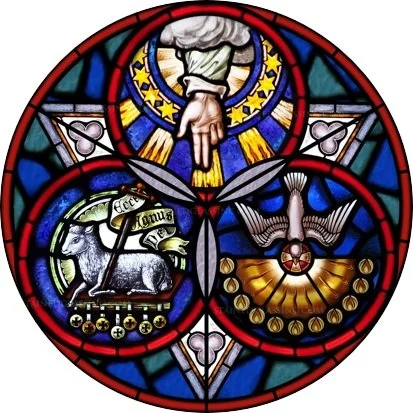
The following is a summary of heresies faced by the early church and how the twelve articles found in the Apostles’ Creed addressed each of them. It is arranged in three sentences reflecting trinitarian doctrine, affirming the roles of the Father, Son and Holy Spirit. The word creed comes from the Latin word credo, which means, “I Believe.”
God the Father
1. I believe in God, the Father almighty, maker of heaven and earth.
False Teaching: The material world was inherently corrupt and evil because it was created by a foolish spirit. A pure God could never touch this material world without being corrupted. This heresy was known as Gnostic Dualism.
Creed’s response: God made everything―both physical and spiritual worlds. The material world is not evil or beneath God’s concern. It is God’s creation and is so it is good. This also means that God is not shaping something that existed before him; God is the source of all that exists.
God the Son
2. And in Jesus Christ, his only Son, our Lord,
False Teaching: Jesus was a normal person who was “adopted” by God who imparted him with a “Christ spirit” when he was baptized. This spirit left him when he died. This heresy was called Adoptionism.
Creed’s response: Jesus is not an ordinary person whom God later adopted. Jesus is the Christ, God’s unique Son, and our ultimate Lord. Nothing in life should truly humble us except for Jesus, the Lord and Savior
3. who was conceived by the Holy Spirit, born of the Virgin Mary,
False Teaching: Jesus wasn’t a person, but a spiritual appearance like a hologram. This was Known as Docetism.
Creed’s response: Jesus is truly divine by being conceived of the Holy Spirit and truly human. He did not merely appear to have a body. By naming the Virgin (bypassing original sin) Mary and his birth, the Creed roots Jesus in a real human body.
4. suffered under Pontius Pilate, was crucified, died, and was buried;
False Teaching: Forms of both Docetism and Gnosticism taught that Jesus escaped suffering. The Christ, they believed, was perfect and would not know pain, or bleeding, or death.
Creed’s response: Jesus truly suffered and died. Pontius Pilate’s name not only places these events in human history but also makes it clear that Jesus’ suffering was not an illusion but a physical and historical reality.
5. He descended into hell (the dead).
False Teaching: Some taught that Jesus did not really die but in the tomb suffered from something like a coma. These were the Apollinarians who taught that Jesus’ mind and spirit were too holy to experience death and separation from his human body.
Creed’s response: Jesus entered fully into human death. There is no place of suffering, loss, or darkness beyond the reach of Christ. Some versions say, He descended into hell, while others translate the phrase as, He descended to the dead.
6a. On the third day he rose again from the dead; he ascended into heaven,
False Teaching: Because the Gnostics taught that corrupt physical matter and human flesh could not comingle with a perfect God, they believed salvation involved separation from the physical universe forever and that Christ’s body could not ascend into heaven.
Creed’s response: The resurrection was not simply the survival of Jesus’ spirit. God raised Jesus from death. His ascension declares that embodied human life has a place in God’s eternal purpose; salvation is not an escape from creation, but its renewal.
6b. and is seated at the right hand of God the Father almighty,
False Teaching: Some taught Jesus was nothing more than another prophet, equal to Moses or Isaiah; he was seen as a rabbi from Nazareth. This heresy was known as Nazareanism.
Creed’s response: In the ancient world the one seated at the right hand of a ruler acted with the same power as the ruler himself. This line from the creed proclaims that Jesus is co-equal in God’s rule and is superior to all other prophets and teachers. His victory over sin and death is complete; Jesus alone holds ultimate authority.
7. From there he will come to judge the quick (living) and the dead.
False Teaching: While the Gnostics taught that Jesus would have no interest in punishing the physical world because it was evil and needed to be destroyed, Marcion and his followers taught that Jesus who embodied love and grace would never judge or punish anyone.
Creed’s response: Human choices matter; injustice will not last. Christ’s judgment means evil will be exposed; creation will be set right, purified, and restored, not abandoned. Divine love includes both deep mercy and unbiased justice.
God the Holy Spirit
8. I believe in the Holy Ghost (Spirit),
False Teaching: Some taught that there were levels of Christian salvation; some could be more holy than others. These heretics were the Montanists who taught that special Christians had the Holy Spirit and others did not.
Creed’s response: The Holy Spirit is not a feeling or impersonal force. The Spirit is God’s living presence, active in the church and in the world. Together, the Father, Son, and Holy Spirit reveal the fullness of the one true God.
9. the holy catholic church, the communion of saints,
False Teaching: Again, the Montanists and many Gnostics taught an elite form of Christianity that gave some believers a special status unavailable to others.
Creed’s response: Here, catholic means universal, not specifically Roman Catholic. The church belongs to no secret spiritual elite. It is the worldwide community of people joined to Christ and to one another by the Holy Spirit. The communion of saints includes all God’s people, living and dead.
10. the forgiveness of sins,
False Teaching: There were some who perceived sin as a remedial condition. We were good enough on our own that with faithfulness and discipline we could move beyond our sinful nature and become pure without the need for redemption. These were the thoughts of the Pelagianists who did not see humanity requiring God’s forgiveness.
Creed’s response: Sin is real, but it does not have to be the last word. God offers forgiveness and a new beginning. No one is beyond the reach of God’s grace.
11. the resurrection of the body,
False Teaching: While Pelagianism taught that humanity was good enough to require no redemption, Manichaeism taught that humanity was so evil that we could only participate in God’s eternity as spirits. As with the Gnostics, they believed physical bodies prevent us from being with God.
Creed’s response: Christian hope is not that the soul will escape the body forever. God values our whole humanity. The Creed looks toward the resurrection and restoration of embodied life.
12. and the life everlasting.
False Teaching: Many ancient philosophies taught that this life was all we had, that death ended everything about us. The church fathers wanted to be clear about our hope in sharing eternity.
Creed’s response: The Creed ends with hope; death is not the end. Eternal life is lasting communion with God in a renewed creation. We do not disappear into nothingness; by God’s grace, we remain fully and personally alive. This line serves as the climax of the Apostles’ Creed, moving our focus from the temporary struggles of this world to the goal of the Christian faith: eternal, unbroken communion with God.
Amen.
Amen means, So be it or This is true. It is our final word, a legal stamp of trust in everything the Creed proclaims.